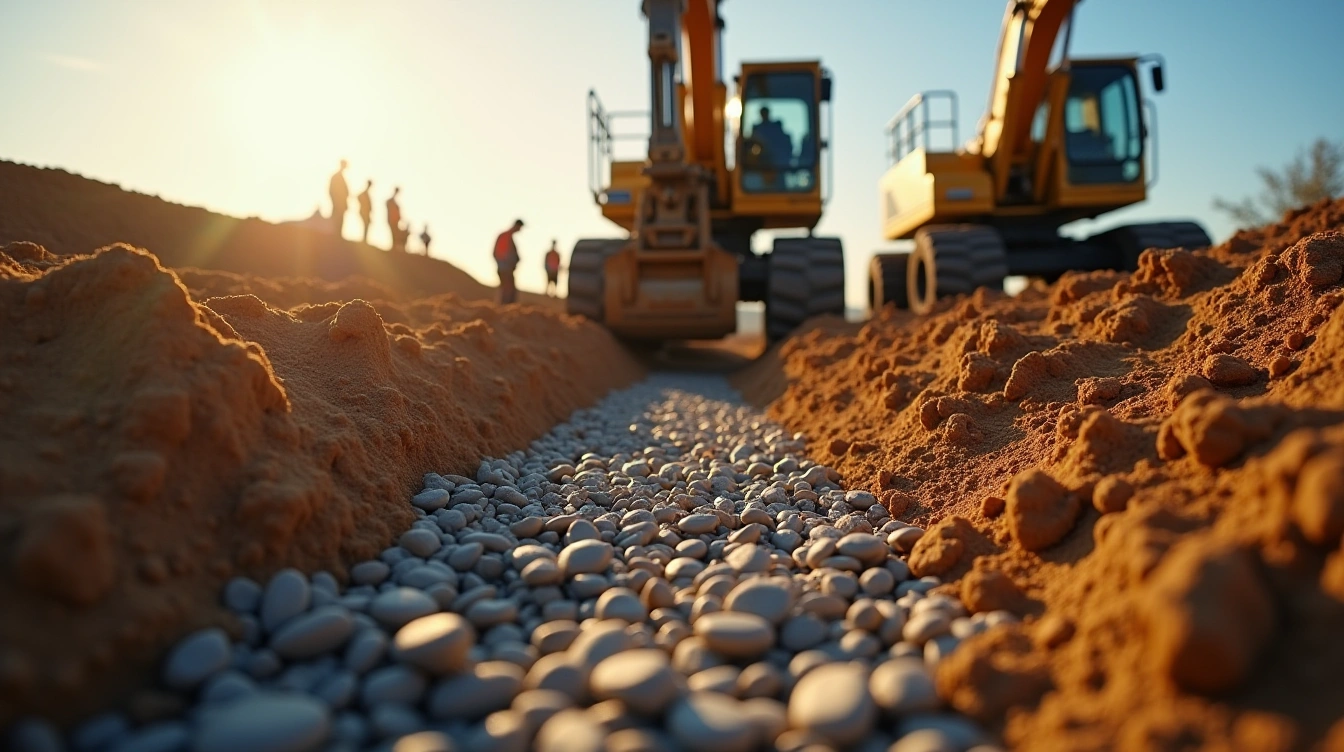
Every construction project begins with the ground beneath our feet, yet not all soils offer the same stability. Weak, compressible, or waterlogged soils require specialized intervention to support heavy loads and guarantee structural integrity. Ground improvement solutions encompass a diverse array of advanced techniques designed to strengthen and stabilize challenging soils. These innovations enable safe building where it was once impossible, fueling progress in geotechnical engineering.
Understanding ground improvement techniques
The concept of ground improvement involves targeted interventions that enhance soil properties to meet specific project requirements. Civil engineers select suitable methods based on site conditions, soil composition, and anticipated load demands. Enhanced soil quality not only increases structural support but also mitigates risks such as settlement and liquefaction during seismic events.
Also to see : Effortless air source heat pump installation in london
A variety of ground improvement techniques address the unique challenges faced across sectors—from road embankments and utility corridors to building foundations and major infrastructure projects. Each endeavor requires a tailored evaluation to determine the most effective combination of solutions, ensuring both safety and long-term performance.
Principles behind soil stabilization and reinforcement
This might interest you : Expert tree surgeon services in moray for your trees
Soil stabilization improves soil strength and decreases permeability through physical, chemical, or mechanical processes. In contrast, soil reinforcement introduces high-strength materials within the soil mass, increasing its capacity to withstand greater forces. Both strategies aim to boost load-bearing capabilities and prolong the life of engineered structures. If you are exploring service providers in this domain, consider consulting Ground Improvement Solution Services for expert assistance in implementing these solutions effectively.
The optimal technique depends on factors like groundwater presence, grain size distribution, organic matter content, and construction schedules. The integration of advanced materials and equipment has made today’s soil stabilization and reinforcement solutions more efficient, opening up previously unsuitable sites for reliable and cost-effective development.
Key ground improvement methods explained
Many projects depend on combining several approaches to achieve optimal results. Industry-standard ground improvement methods have become widely adopted due to their versatility and proven effectiveness.
What role do soil mixing and grouting play?
Soil mixing blends weak soils with binders such as cement or lime, using specialized machinery to create columns or blocks of strengthened ground. This process enhances bearing capacity and significantly reduces settlement risk. Grouting injects fluid binders—ranging from cement-based to chemical suspensions—into voids or fractures, solidifying the soil matrix upon setting. Jet grouting advances this technique by eroding soil with pressurized jets before simultaneously injecting binding agents, producing robust soilcrete columns even in confined spaces.
These methods provide design flexibility and are particularly suitable for urban environments or locations with limited access. Their precision allows engineers to target specific zones beneath existing structures or new developments, minimizing disturbance to surrounding areas.
How do deep dynamic compaction and aggregate piers impact soil properties?
Deep dynamic compaction densifies large volumes of granular fill or loose soils by repeatedly dropping heavy weights from height. This action consolidates subsurface layers, improving overall strength and reducing post-construction settlement. It is especially advantageous for reclamation projects and brownfield redevelopment.
Stone columns and aggregate piers reinforce soft soils by inserting vertical inclusions of crushed stone or gravel. Stone columns facilitate drainage while supporting additional loads, leading to rapid consolidation and increased stability in weak clay or silty soils. Aggregate piers operate similarly, often using vibration to compact stone within narrower shafts—an approach ideal for supporting buildings, tanks, or embankments.
Geogrid technology and its application
Modern soil reinforcement increasingly utilizes geosynthetic materials. Geogrid technology employs perforated polymeric sheets installed in horizontal layers within the soil. These grids interlock with aggregates, distributing stress and restraining lateral movement, which strengthens slopes, retaining walls, and pavements over time.
Geogrids are highly effective for earth-retaining structures, slope rehabilitation, and reinforcing subgrades beneath roads and railways. Lightweight and easy to install, they reduce transportation costs and offer lasting durability. From a sustainability perspective, geogrid systems minimize excavation and the need for imported fill on many projects.
- 🟩 Soil reinforcement in steep embankments
- 🏗️ Base stabilization for paving applications
- 💧 Enhanced drainage control beneath highways
- 🌱 Rehabilitation of landslide-prone slopes
Choosing the right ground improvement solution
Each soil stabilization or reinforcement technique presents distinct advantages and limitations. Professionals rely on thorough testing and computer modeling to predict outcomes before implementation. Collaboration among engineers, contractors, and geologists ensures that chosen strategies meet environmental regulations, budget constraints, and the intended lifespan of each facility.
The table below compares essential characteristics of common ground improvement methods, illustrating why careful assessment is crucial when specifying each approach.
| 🔧 Method | ⚙️ Main Benefit | ⏳ Typical Timeframe | 🌍 Environmental Impact |
|---|---|---|---|
| Soil mixing | High strength, low settlement | Weeks–months | Medium (binders and spoil) |
| Grouting/jet grouting | Seals voids, works in tight spots | Days–weeks | Low–medium |
| Deep dynamic compaction | Large-volume treatment | Weeks | Low (no chemicals added) |
| Stone columns/aggregate piers | Dewatering, increased stiffness | Weeks | Low–medium |
| Geogrid technology | Flexible, light, reusable | Days–weeks | Very low |
Practical considerations for ground improvement projects
Implementing ground improvement solutions demands meticulous planning and expert execution. Numerous variables—including equipment accessibility, weather patterns, and proximity to adjacent structures or utilities—affect project outcomes.
Continuous monitoring is vital during and after installation. Engineers employ specialized instruments to track settlement, pore water pressure, and ground vibrations. These checks confirm that improvements meet design criteria and serve as an early-warning system for unexpected developments or risks.
- 📈 Baseline laboratory testing of soil samples
- 👷 On-site pilot trials to refine parameters
- 📝 Review of local permitting and compliance rules
Effective ground improvement secures investments against future movements, minimizes costly repairs, and enhances resilience to severe weather or seismic activity. This proactive strategy supports sustainable development and responsible land management worldwide.
Common questions about ground improvement
Which ground improvement technique is best for liquefaction mitigation?
For mitigating liquefaction, stone columns, aggregate piers, and deep dynamic compaction are widely used. These methods increase density and promote rapid drainage, dissipating pore water pressure during seismic events. The selection depends on soil type and site-specific constraints, with designs refined through field testing and engineering analysis.
- 🪨 Stone columns for cohesive soils
- 💥 Deep dynamic compaction for granular fills
- 🔬 Site-specific assessment always recommended
What are the main differences between grouting and jet grouting?
Grouting injects binders into the soil to fill gaps or stabilize loose zones, typically using hydraulic pressure. Jet grouting employs high-pressure jets to mix binder and soil in place, forming strong columns regardless of initial consistency. Jet grouting treats larger, more uniform zones and adapts well to complex geometries or restricted-access sites.
| 🛠️ Technique | 📏 Coverage | 🚧 Application Area |
|---|---|---|
| Standard grouting | Localized | Narrow spaces, cracks, minor leaks |
| Jet grouting | Broad | Pits, basements, subway tunnels |
Can geogrid technology replace traditional foundation systems?
Geogrid technology complements rather than replaces conventional foundations in most scenarios. It helps distribute loads and limits soil displacement under pavements, embankments, and retaining walls. For lightweight or moderate structures, geogrids may allow shallower footings; however, major buildings still require piles or slab foundations supported by reinforced platforms.
- 🧱 Suits roadways, parking lots, and slopes
- 🏢 Complements—not substitutes—deep foundations
- ♻️ Reduces raw material needs and waste
How does soil stabilization benefit construction in flood-prone areas?
Soil stabilization alters weak or saturated soils to resist water infiltration and maintain strength during periods of heavy rainfall or flooding. Chemical binders, lime treatments, and admixtures bond soil particles together, greatly enhancing bearing capacity. Reduced permeability protects subgrades and prevents washout.
- ☔ Less risk of erosion and collapse
- 🦺 Safer and more reliable infrastructure
- 🕓 Faster construction on marginal sites